Devious Journal Entry


Tanzanite Roses Project
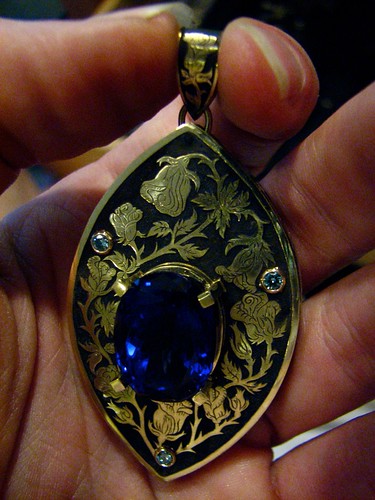
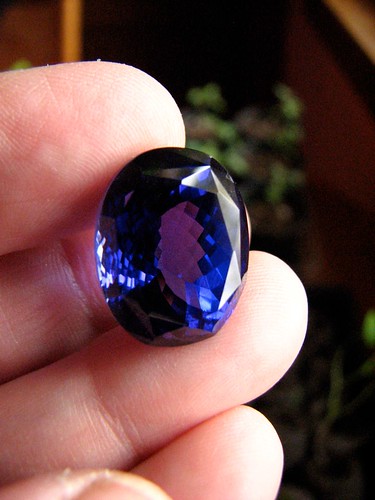
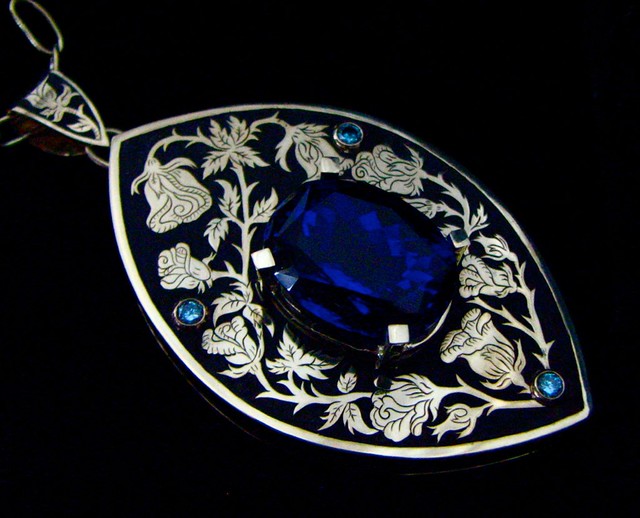
We'd like to share some of the process images from our custom "Tanzanite Roses" (recycled) 18k gold necklace. This piece was made as an anniversary gift for a very special client. He had purchased this incredible 24 carat tanzanite gemstone over 10 years ago and wanted it set into the perfect pendant for his wife. We were all very happy with the result. My design work and Mark's skills in hand-engraving worked very well in this collaboration.
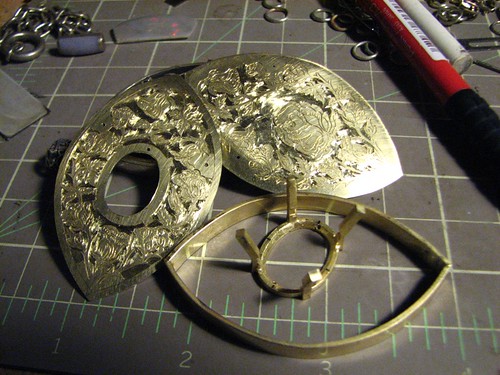
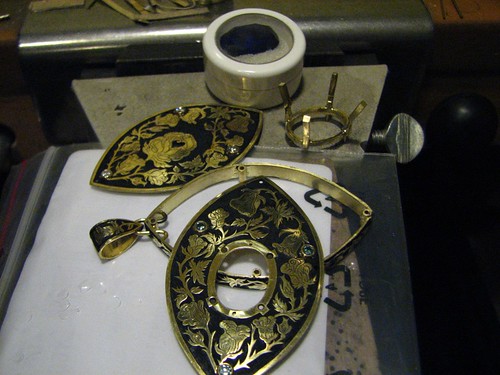
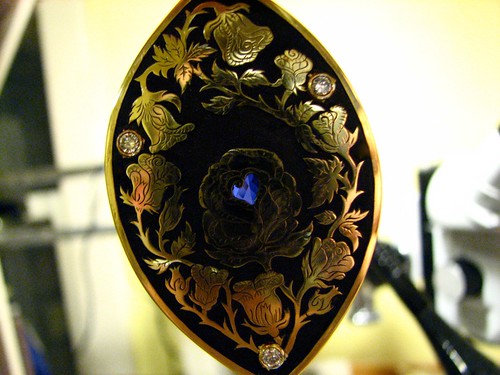
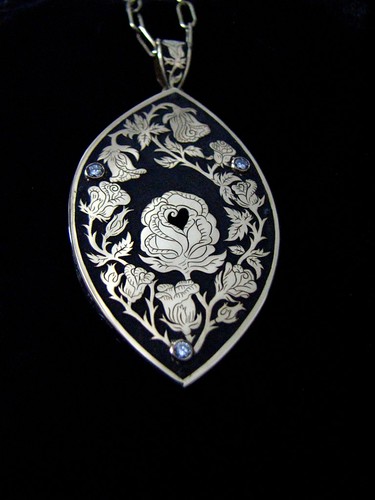
This piece was fabricated with hand engraving techniques, piercing and connected using rivets. The pendant is a hollow box-style piece, made to accommodate and protect the height of the extraordinary tanzanite gemstone. The hand engraving alone on this piece took about 100 hours. The front of the piece holds 3 tube-set blue diamonds and the back has 3 white diamond accents. The pierced heart on the back of the piece acts as a viewer to the very center~ the heart~ of the gemstone. Everything on this piece was hand-fabricated~ down to the 18k chain and gemstone prong setting. we did not fabricated our own tubing or sheet for this job.
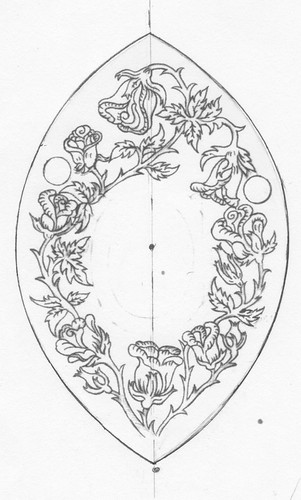
Jessica's hand-drawn templates for piercing and hand-engraving.

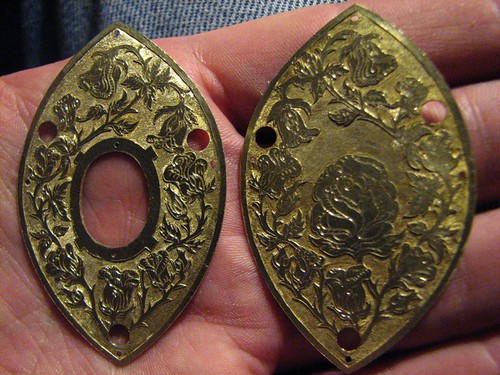
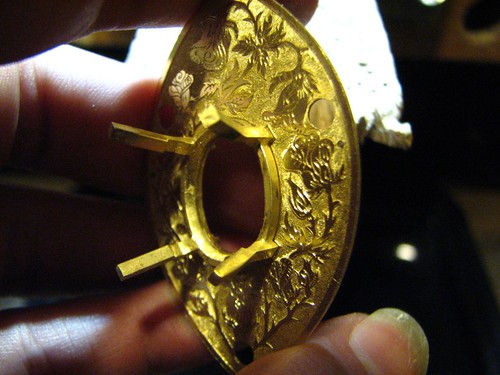
Process photos showing various stages of the hand engraving process.
Mark removed metal from the base using gravers, then stippled the base with gravers for achieving both contrast and a clean surface. Our client wanted the gold base blackened for even more contrast. We had never blackened gold with anything other than enamel and it was an interesting learning experience. The edging to the box pendant as well as the bail were hand engraved with the same vine rose theme. The front plate, back plate and box edge were all attached using rivets.

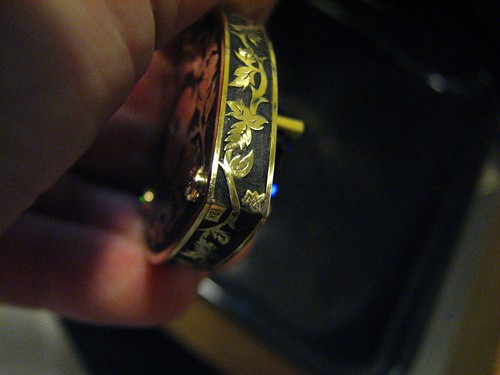
Hand engraved "M/J" signature/18k gold "stamp"~
View from above~
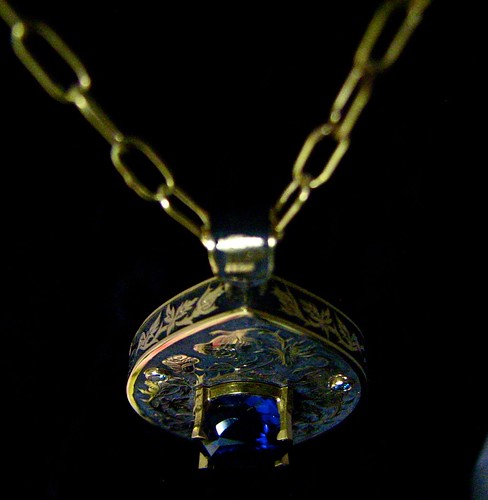
Final Pics~

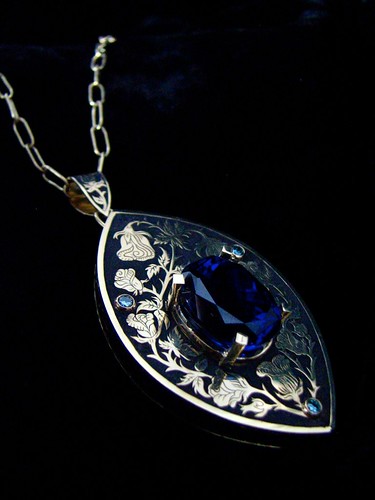
Side 2 showing the heart view-finder to the center of the gem~
Our gemstone/jewelry blog~ ganoksin.com/blog/differentsea…
Our Flickr Gallery~ www.flickr.com/people/jessa115…
Facebook ~ Different Seasons Fan Page~ www.facebook.com/DifferentSeas…
Facebook~ Personal~ www.facebook.com/JessaDow
Latest Projects~
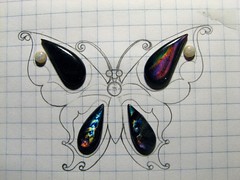
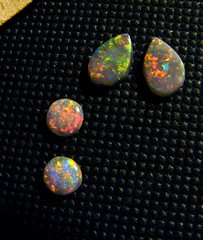
In the meantime, these are a couple pieces we've enjoyed making for some very special clients.
This is one of my new favorites~ a ring with pierced & hand engraved 18k gold overlay, a black Lightning Ridge opal (cut in-house by Mark) set in 22k gold and sapphire & diamonds accents set in 18k.


Mark's beautiful 14k/18k palladium white gold gembone ring & pendant set.







Exotic Gemstones Vol 2
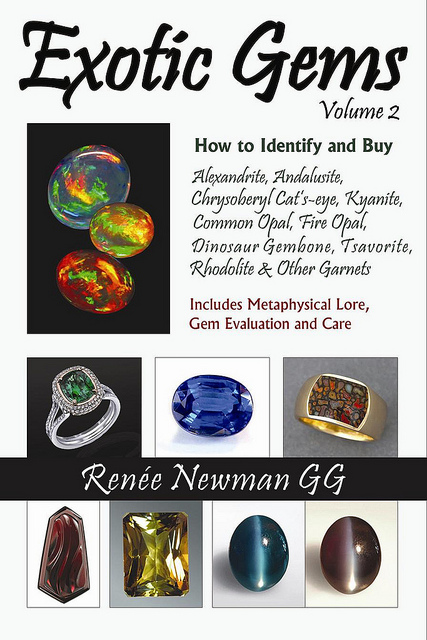
PURCHASE THIS BOOK HERE~ Or contact us personally to buy a copy signed by Mark~ msadesigns@yahoo.com
Renee Newman's most recent book, Exotic Gemstones Vol 2, includes a beautiful array of gems not often found in the cases of mainstream jewelry stores. This lavishly illustrated book takes the reader through a visual tour of luscious, mouth-watering rare gemstones and provides detailed gemology information that would be helpful to both the professional and hobbyist collector. The book is a concise guide on how to evaluate "exotic" gemstones in order to buy, sell, and grade materials such as alexandrite, tsavorite garnet, gembone, coprolite and fire opal as well as touching on geographical information, history and the folklore that adds to the mystique of each gemstone. This volume is a wonderful companion to Renee Newman's first book in the series, which covered beautiful gems such as rhodochrosite, ammolite, tanzanite, spectrolite, moonstone, sunstone and other feldspars. We find this Exotic Gemstone book series to be a refreshing departure from the sea of gem/gemology books available on popular precious and semi-precious gemstones. These books are a good buy for anyone interested in learning about buying, collecting and "rockhounding" gems as well as being very beneficial for lapidary artists and jewelers with a desire to learn more about using rare, exotic gemstones for gem cutting and wearable art jewelry. We were fortunate enough to contribute gem and jewelry photos to the chapters on fire opal, coprolite~and last but certainly not least~ gem dinosaur bone or "gembone". My partner and fiance Mark Anderson specializes in this extraordinary material and was thrilled to work with Renee during the writing of the chapter on gem dinosaur bone and coprolite. Very little has been published on the subject of gembone and this book will be an invaluable source on the subject for years to come. Gembone is a relatively unknown gemstone in both the jewelry and gem markets. This books provides a wealth of information in a simple, concise manner clear enough for even the most novice gembone collector to understand. The chapter includes sections to assist in correctly identifying certain types of bone (vertebrae, hip, etc), cell pattern, treatments and overall quality and durability of various gembone specimens. An evaluation/ pricing guide is also present with a list of qualities to look for when buying bone. With over 7 pages of vivid, full-color gembone photographs this book will be a great addition to any gembone collector's library! One of Mark's 14k gold gembone inlay rings was chosen to be included on the cover, along with other talented artists such as Larry Woods, Emil Weiss, Sherris Cottier Shank and Paula Crevoshay. A long list of talented artists have contributed photos to this book. Master gem artists John Dyer, Clay Zava and Glenn Lehrer along with amazing jewelry by Zaffiro, Mark Schneider and Yossi Harari among many others. It's an honor to be included among such impressive company. After seeing this most recent volume we're all the more excited to see the third book in the Exotic Series! We're heard a "rumor" that the third volume will include a section on fire agate! We've shown some of the gem and jewelry photos we've contributed to this latest volume. We'd like to thank David Greene for photographing the gembone inlay ring for the cover of the book.
Gembone Jewelry~ All casting, fabrication and lapidary by Mark Anderson.
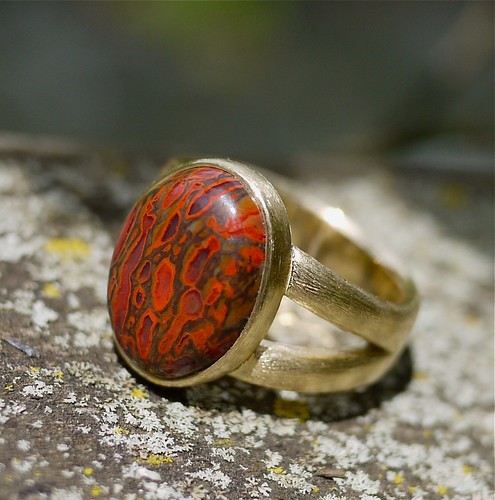
18k gold ring with custom cut top grade gem dinosaur bone cab. Thanks to James Petit for taking such a great photo!  22k Gold Reversible Gembone Earrings
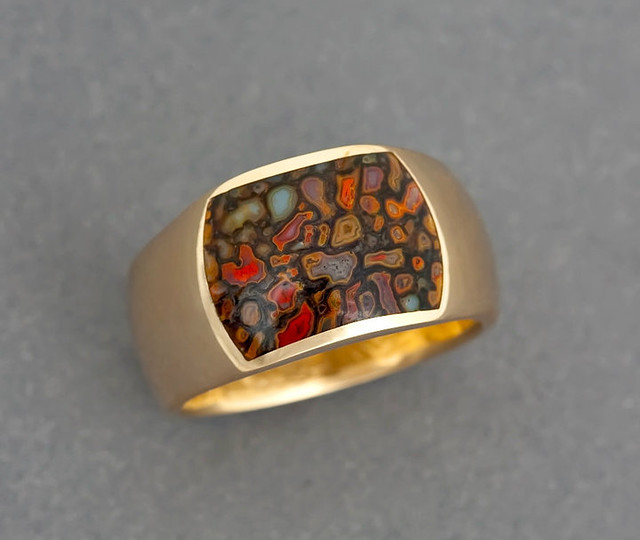
14K Gold Gembone Inlay Ring (shown on cover). Professional Photography By David Greene~ David Greene Photography~ www.diaphoto.net/
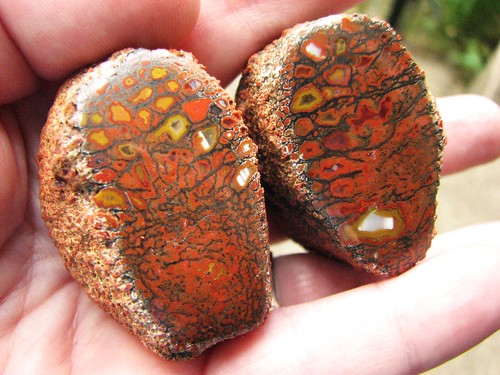
Gembone Specimens and Lapidary Arts from the Different Seasons jewelry gembone collection~
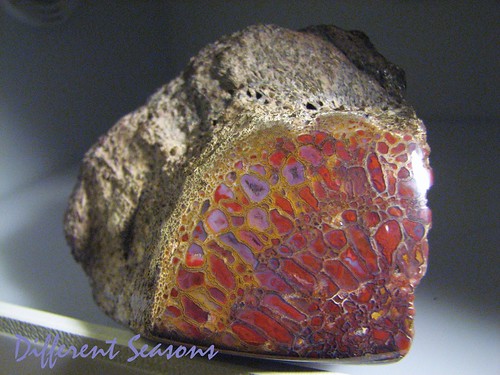
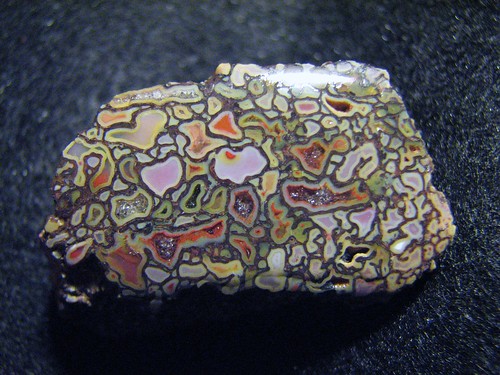
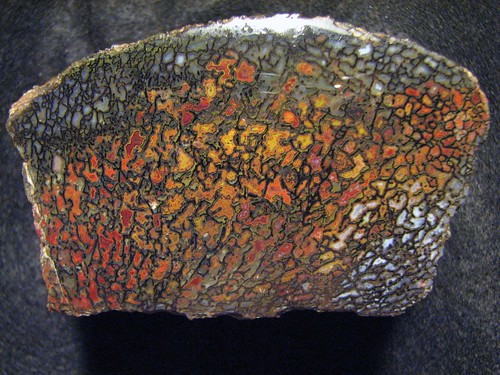
Coprolite Jewelry~All Casting, fabrication and Lapidary by Mark Anderson and Jessica Dow. Serpentine Pendant Carving by Martha Borzoni. Photos by Jessica Dow. 
Sterling Silver Cufflinks with Coprolite Inlay.
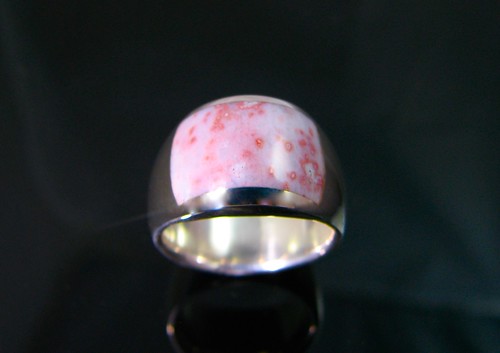
Sterling Silver Ring with Pink Coprolite Inlay ( a different shot of the ring was used in the actual book)
Fire Opal Jewelry~
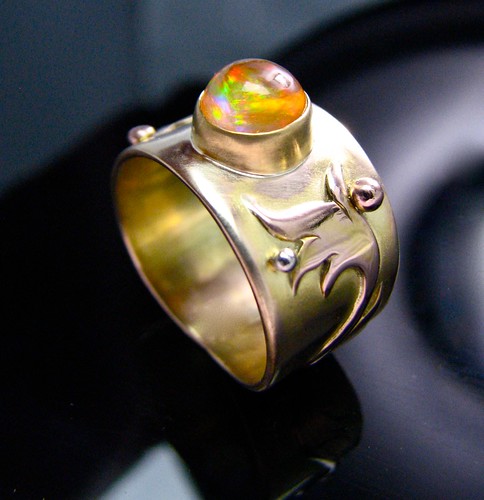
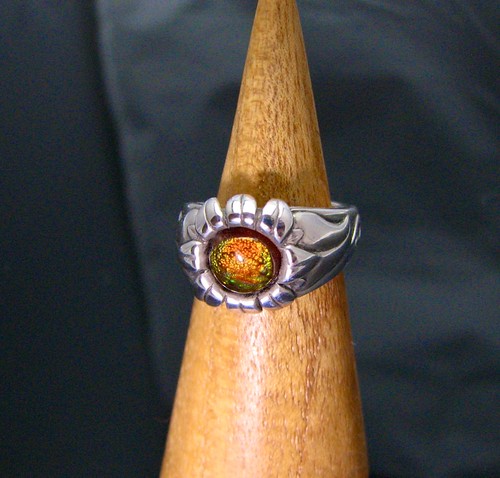
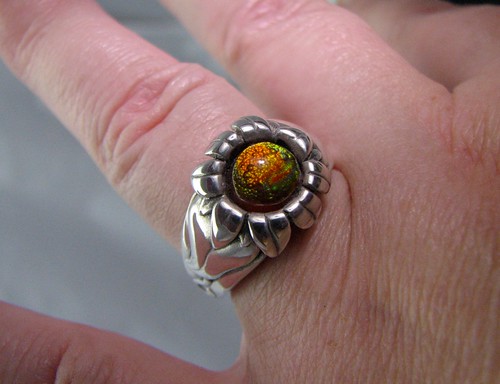
14k Gold Fire Opal Ring by Jessica Dow
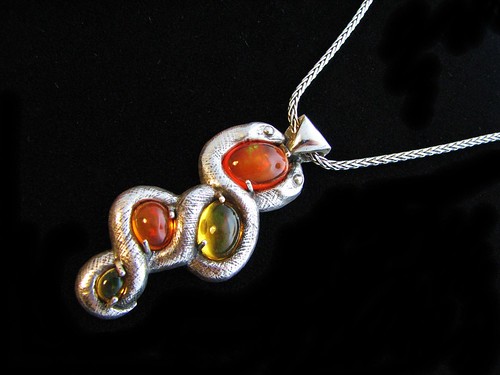
Serpentine Pendant by Martha Borzoni and Mark Anderson
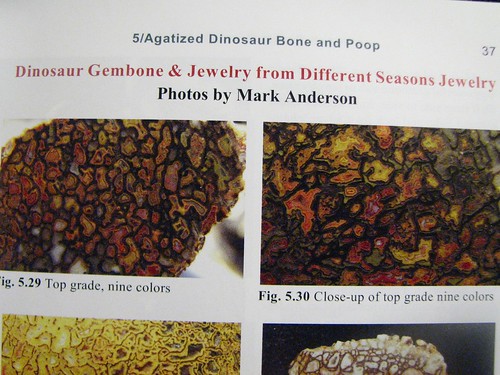
~ ~Book Excerpt.. to see more buy the book
See details on the September issue here~ www.artjewelrymag.com/Magazine…
See details on the November issue here~ www.artjewelrymag.com/sitecore…

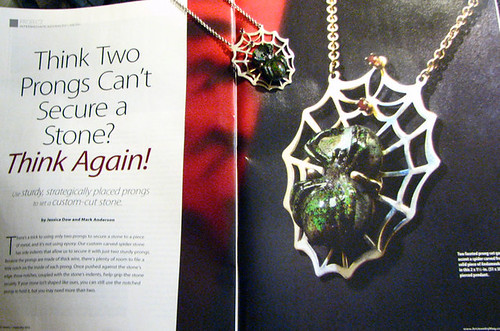
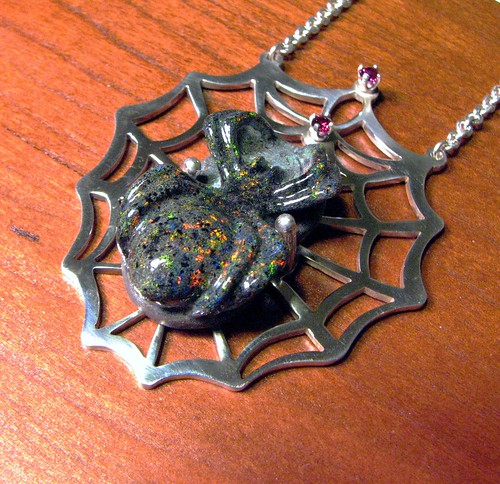
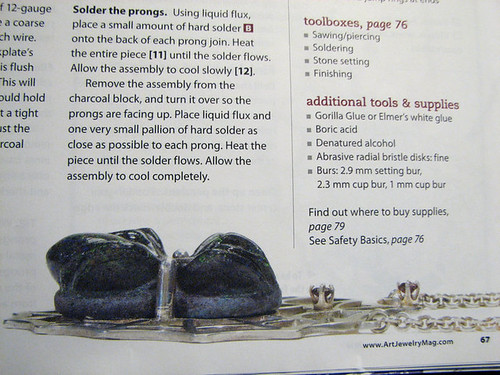
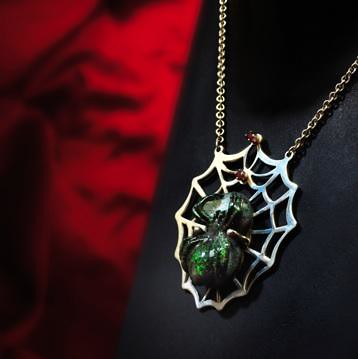
Photo excerpts courtesy of Art Jewelry Magazine
My online Art Jewelry Magazine article demonstrates an easy step-by-step
process on how to treat Andamooka Matrix opal with a non-toxic,
environmentally friendly process safe and simple enough to complete in any kitchen. This article accompanies our opal carving article in the
current issue of Art Jewelry. See full article here~ www.artjewelrymag.com/en/Resou…

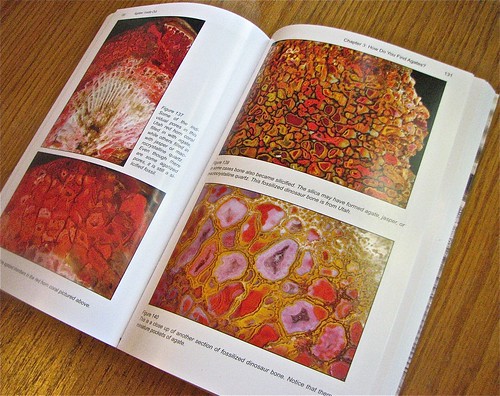
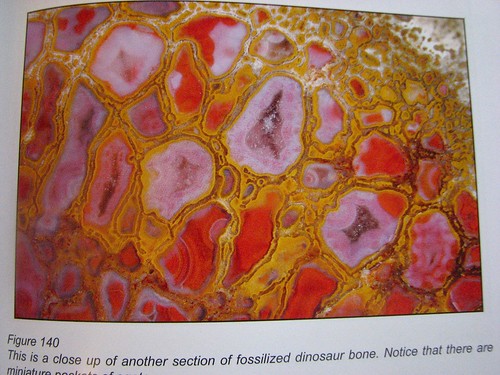
Our dinosaur bone has been featured in this beautifully photographed book "Agates Inside Out".
Agates Inside Out by Karen A Brzys
Photography by Thomas P. Shearer
For sale here~ www.agatelady.com/gift-shop.html
This comprehensive book helps readers to think like an agate so they can be more successful in finding them. The book features photographs taken by Thomas P. Shearer. He uses innovative techniques that have never before been employed to take pictures of minerals. Also included are helpful diagrams that illustrate how agates formed.
We're currently working on submissions for Renee Newman's next volume of Exotic Gemstones!
This ring was a collaboration between me, my mom Martha and Mark. I did the original design, my mom did the carving work and Mark did the casting/gem setting/finishing. More professional shots will be finished soon.